

IV.(Field Note) NaplesPhilip Samartzis
(Reading time, 3m29s)Threshold
After three weeks in Somma Vesuviana and Campi Flegrei I spend four days in Naples before travelling to Stromboli.
I return repeatedly to the neighbourhood surrounding Piazza Dante while other parts of the city I pass through only intermittently. The streets remain in constant motion. Pedestrians, motor scooters, buses and cars negotiate the same confined spaces as horns punctuate conversations drifting from cafés, balconies and open doorways. The city carries the patina of centuries of habitation. Its rhythms and dissonance soon become familiar.
Guido Minervini, who runs OVO Studio near Piazza Dante, spends several days showing me around the city. Our conversations move between neighbourhoods, geology, music, the Irpinia earthquake, Maradona and the monitoring of Vesuvius. Naples reveals itself through these walks as much as through the places we visit.
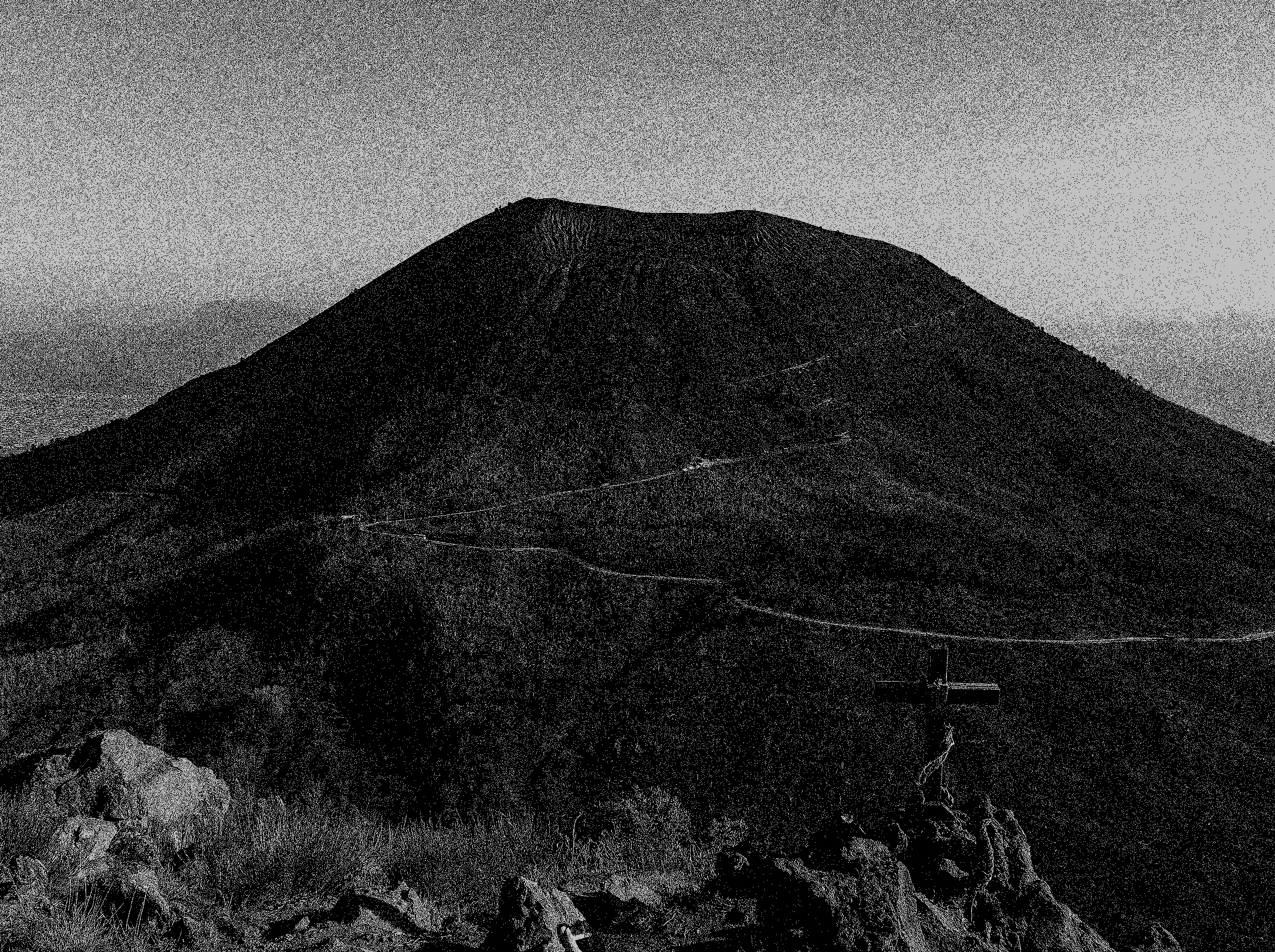
From several points across the city I find myself looking east. Having spent time on Monte Somma, I find it increasingly difficult to see only Vesuvius. The older mountain remains visible around the younger cone before both disappear behind apartment buildings and church towers. Elsewhere they vanish altogether before reappearing a short distance later. The skyline is continually interrupted and reassembled as I move through the city.
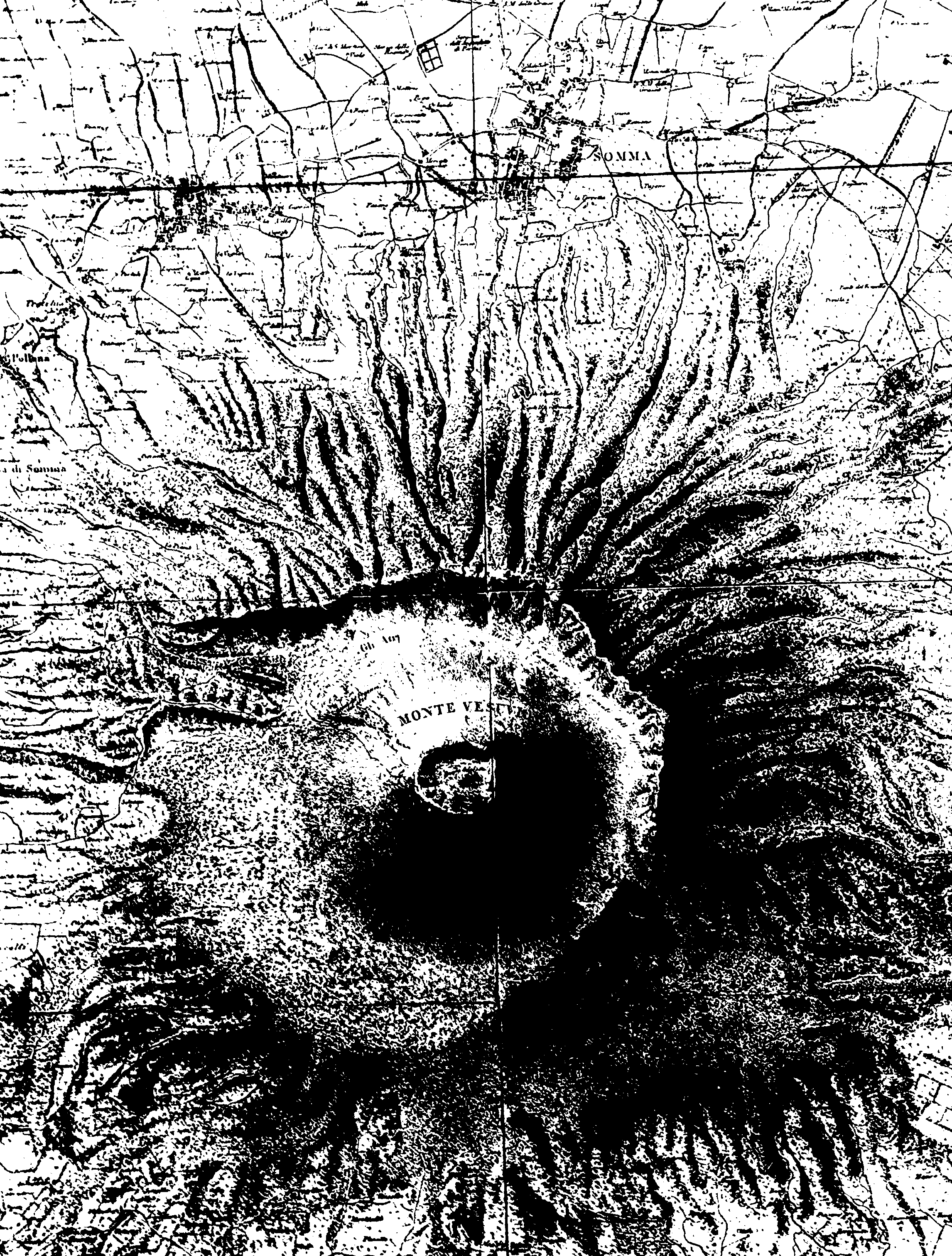
On the second day I return to Monte Somma with the geologist Umberto Saetta. The woodland differs noticeably from the paths I had walked with Salvatore. The ground beneath our feet is softer, composed of weathered volcanic material. Approaching the mountain from another direction deepens my understanding of its geological structure. At several points Umberto removes reproductions of maps, engravings and paintings from a plastic folder, holding them against the landscape while explaining features no longer immediately visible. Historical images become another way of encountering the mountain.
The following morning I visit the Archaeological Museum. Frescoes, mosaics, sculpture, domestic objects and fragments of architecture recovered from Pompeii, Herculaneum and neighbouring settlements accumulate across room after room. Among them I recognise one of the images Umberto had carried with him the previous day.
Bacchus stands before Monte Somma clothed in grapes while a serpent moves across the foreground. Beyond the mountain a smaller cone is often understood to represent Vesuvius before the eruption of AD 79. Whether this interpretation is correct matters less than the relationship the painting establishes between cultivation, belief and the volcanic landscape. The mountain is neither picturesque nor catastrophic. It is inhabited. Having first encountered the image on the mountain itself, I now read it less as a fresco than as another observation of the landscape.
The following afternoon I continue to Capodimonte. Across successive galleries Vesuvius repeatedly returns. Sometimes it dominates the composition, elsewhere it recedes almost unnoticed behind geothermal fields, cultivated land and the Bay of Naples. By the time I reach Warhol's Vesuvius the mountain has become something else again: an image detached from observation yet still inseparable from the city. Across two millennia the works preserve changing ways of understanding the same landscape.
Walking back towards Piazza Dante my attention returns to the city's walls. Damaged plaster reveals earlier repairs. Yellow volcanic tuff emerges beneath brick before disappearing beneath another layer of render.
Conversations with Guido continue over several days. He explains that Vesuvius is among the most closely monitored volcanoes in the world, not because it is the most active volcano, but because of the number of people living around it. He also speaks about the years following the 1980 Irpinia earthquake, recalling Naples at one of its lowest ebbs in recent history. It is within this context that Maradona enters the conversation. Guido remembers the sense of hope that accompanied his arrival. His image continues to saturate the city, appearing in cafés, apartment entrances and small shrines, becoming part of its everyday fabric.
As the days pass, the museums and the city feel less like separate places than different expressions of the same accumulation. The faded reds, ochres, greens and volcanic greys of the surrounding streets continue to recall the frescoes and mosaics I encountered in the Archaeological Museum. Roman foundations, volcanic tuff, repaired walls and recent earthquake damage remain visible together, compressing different temporalities within the same streets. Looking across Naples, it becomes increasingly difficult to separate geology from habitation.